Vietnam is becoming an increasingly popular destination for foreign investors. Robust economic growth, a growing middle class with rising consumer spending, and an increasing number of promising listed companies are making the country more attractive for equity investors as well.
In Vietnam’s capital Hanoi, the metro has been running for three years—and just before Christmas 2024, the first metro line also launched in the country's economic center, Ho Chi Minh City. Six more lines are planned. Not far from the metropolis, a new international airport is also under construction. The Vietnamese government is vigorously pushing forward with infrastructure development. “In 2025, it plans to increase infrastructure spending by 70 percent. That could boost economic growth by 1 to 1.5 percentage points,” says Mario Timpanaro, manager of the Lumen Vietnam Fund. In addition to state investment, he sees other drivers supporting the Vietnamese stock market this year and beyond.
The economy grew by 7.06 percent in 2024, and expectations for the coming years range between 7 and 8 percent. “In addition, rising consumer demand and continued inflows of foreign direct investment will provide strong economic momentum,” Timpanaro says.
Vietnam is home to nearly 100 million people, with an average age of just under 33. The middle class is expanding and spending—domestic consumption accounts for around 55 percent of GDP. “After the pandemic, the government implemented numerous measures that have increased prosperity. People have more money in their wallets, which benefits domestic consumption. This trend will continue,” says the fund manager. A growing number of internet users and improved logistics are also fueling rapid growth in e-commerce.
China+1 and Bamboo Strategy Supporting Growth
Industrialization is progressing strongly thanks to rising foreign direct investment, which reached an impressive USD 25.3 billion in 2024. “The government is now implementing reforms more swiftly than in the past, attracting new investors,” explains Timpanaro. Vietnam is benefiting from the China+1 strategy pursued by many international companies seeking to diversify production due to cost and risk factors. Since the start of the U.S.-China trade war, which may escalate again with the change in U.S. leadership, Chinese companies are also increasingly investing in Vietnam.
While the U.S. trade deficit with Vietnam remains large, proactive steps have been taken to reduce the surplus. For example, Vietnamese airlines have ordered aircraft from Boeing, and LNG purchases from the U.S. (USD 3 billion) are set to increase. Vietnam benefits from its so-called “bamboo strategy”—firmly rooted but highly flexible—allowing the country to remain open to all potential partners.
The positive growth outlook leaves Timpanaro optimistic about the long-term performance of Vietnamese equities: “The country is only at the beginning of a long journey and remains highly attractive for equity investors.” He also highlights the attractive valuation relative to other Asian equity markets. “We believe the valuation gap will narrow as Vietnamese equities outperform,” he says.
Around 1,600 companies are listed on the Ho Chi Minh City (HOSE), Hanoi (HNX), and UPCOM stock exchanges. Market capitalization and liquidity on Vietnamese exchanges have increased significantly in recent years, even surpassing other emerging markets. Nevertheless, index providers still classify Vietnam as a frontier market. Timpanaro expects an upgrade by FTSE this year; MSCI may take another one to two years.
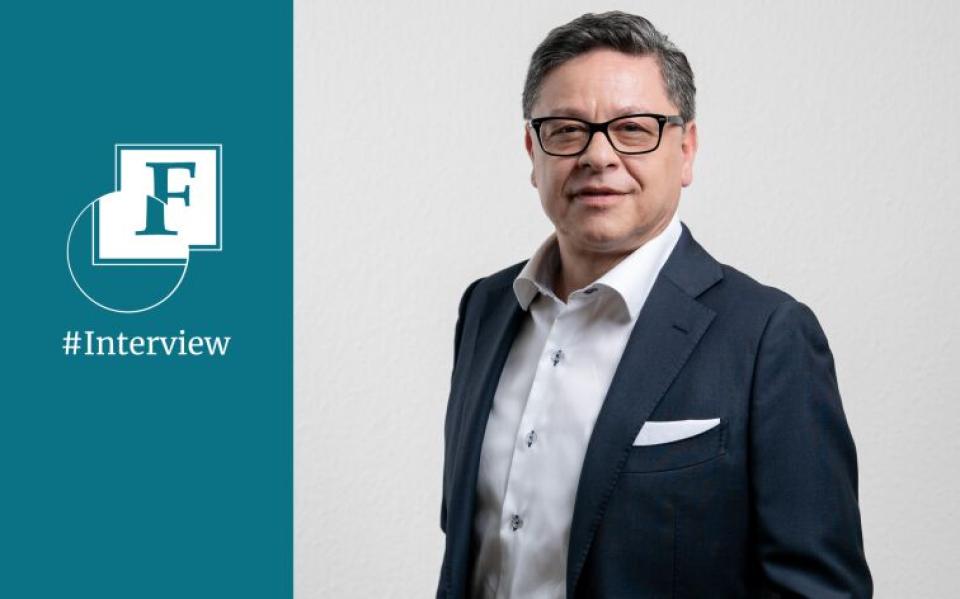
Interview with Mario Timpanaro, AQUIS Capital
"Our fund offers access to a fascinating growth market and proven portfolio diversification."
Mario Timpanaro, co-founder and portfolio manager of the Lumen Vietnam Fund, discusses the opportunities in Vietnamese equities, the country's expected upgrade to emerging market status, and the benefits of investing in small and mid-cap companies.
Mr. Timpanaro, the MSCI Vietnam and FTSE Vietnam indices have yet to recover from their sharp 2022 downturn, but the Lumen Vietnam Fund has already bounced back. How did you achieve this?
Timpanaro: One of the key success factors is a disciplined approach combining fundamental analysis and technical charting. Our performance is based on an active, fundamental investment strategy that enables us to selectively invest in undervalued companies with strong growth potential. The secret is stock picking, which wouldn’t be possible without our twelve-member team on the ground in Ho Chi Minh City.
Your fund focuses on small and mid caps. Why do you prefer smaller companies?
Timpanaro: In every country, small and mid-sized companies are the backbone of the economy—and Vietnam is no exception. They are dynamic and generally more profitable than large caps. Our well-trained analyst team is able to identify these gems early, before they appear on the broader market’s radar.
Which sectors are you currently investing in? Where are you cautious?
Timpanaro: We find sectors like energy, technology, consumer goods, insurance, and banking particularly attractive. For financial institutions, we pay close attention to price-to-book ratios and non-performing loan levels. We are more cautious with residential real estate, especially when it comes to heavily indebted companies.
With approximately USD 350 million in assets, the fund has grown significantly. Can the investment universe accommodate further growth?
Timpanaro: Yes, Vietnam's equity universe still offers sufficient potential for further expansion. The market continues to grow, and the ongoing liberalization for foreign investors is opening up new opportunities. Our active strategy allows us to target growth areas while maintaining flexibility. We also expect several IPOs this year.
How dependent are Vietnam’s economy and stock market on developments in China?
Timpanaro: China, as Vietnam’s second-largest trading partner, plays a key role, especially as a supplier of critical raw materials and components. However, Vietnam has reduced its dependency by diversifying trade relationships and signing free trade agreements with major countries and blocs. Thanks to its bamboo strategy, the country has gained autonomy and resilience.
How relevant is the Vietnamese currency for euro-based investors? What impact has it had historically on performance?
Timpanaro: The Vietnamese dong has been relatively stable against the U.S. dollar in recent years. One reason is the low national debt—only 38 percent of GDP. For euro investors, exchange rates are important, as a weakening dong could reduce returns. The dong has benefited from steady capital inflows and a strong trade balance. The U.S. dollar has strengthened against both the euro and the dong, largely due to interest rate differentials, which also raise hedging costs and weigh on net returns.
Vietnam is still classified as a frontier market. What does it need to achieve emerging market status, and when do you expect the upgrade?
Timpanaro: The main obstacle is ensuring equal treatment for foreign and domestic investors. There are several potential approaches, and it remains to be seen which one the government in Hanoi will choose. Last year, we observed that key reforms—long delayed—were suddenly advanced with renewed urgency. We expect FTSE to upgrade Vietnam to emerging market status by September 2025. MSCI may take until 2027 or 2028.
Why should investors consider Vietnamese equities—and particularly the Lumen Vietnam Fund—now?
Timpanaro: Vietnam is in a unique position: stable economic growth, a dynamic domestic market that contributes 55 percent to GDP, integration into global value chains, and a strong commitment to sustainable development. The Lumen Vietnam Fund offers targeted access to one of the world’s most exciting growth markets, combining attractive return potential with a long-term ESG perspective.
Fund Portrait
In Search of Diversification and Opportunity: Vietnam
For over ten years, the Lumen Vietnam Fund has provided investors with access to the Vietnamese equity market of this fast-growing Asian economy. Its success is driven by a strong local team and a long-standing ESG focus.
More than a decade ago, Mario Timpanaro recognized the enormous potential of the Vietnamese equity market. At the time, Vietnam was facing challenges and was largely overlooked by investors. In his view, share prices did not reflect the country’s underlying potential. In 2012, he co-launched the Lumen Vietnam Fund—the first actively managed UCITS fund focused solely on publicly listed Vietnamese equities. He still manages the fund today, now under the umbrella of Swiss boutique AQUIS Capital in Zurich.
He is not alone in managing the now USD 350 million fund. Since 2013, he has been supported by a team based in Ho Chi Minh City at Vietnam Holding Asset Management (VNHAM). “Our twelve-person team analyzes companies, meets with management, and visits production sites,” Timpanaro explains. He himself travels to the country five to six times per year. Vietnam is his second home, and the VNHAM team is his second family.
On-the-ground expertise is critical for the fund. The strategy focuses on small and mid-cap companies, which Timpanaro sees as having the highest growth momentum. Large-cap names are added tactically. The analyst team aims to identify hidden gems early—before they become expensive. Fundamental analysis is supplemented by technical screening.
Strong Governance as Key to Sustainable Growth
The selection criteria are strict: out of around 1,600 listed companies, only about 100 make it into the fund’s investable universe. Financial filters aren’t the only factor. As an Article 8 fund under SFDR, ESG criteria have been central to the Lumen Vietnam Fund since 2013—even when that approach was initially met with skepticism. “Our primary focus is on the 'G'—governance. Good corporate governance is the key to sustainable growth, stable capital markets, and long-term success,” says Timpanaro. Especially in emerging markets like Vietnam, transparency, shareholder rights, and ethical business practices are critical to gaining investor trust and ensuring economic resilience. “Companies with sustainable business models tend to be more resilient and better prepared for future challenges. Our ESG focus is both an ethical and strategic decision,” he emphasizes.
The fund holds 30 to 40 stocks. Financials (retail banking) currently account for about 30 percent of the portfolio. Consumer staples and industrial real estate (industrial parks) make up another 27 percent. Major holdings (each weighted over 5 percent) include tech firm FPT and Saigon Thuong Tin CJS Bank (as of end-January 2025). The active management combined with a unique strategy has paid off: since launch, the fund has achieved an annualized return of nearly 10 percent in USD—with relatively low correlation to the MSCI World, MSCI Emerging Markets, or EURO STOXX.
AQUIS Capital
Active Asset Management
AQUIS aims to be a leading specialist in active asset management, with a focus on alternative investments and emerging Asia.
Client-Centric Philosophy
We take time to understand our clients’ needs and translate them into tailored solutions. Our passion for what we do is reflected in our work with clients.
Sustainability Matters
UNPRI Social Development Goals (SDGs) and ESG principles are fully integrated into our investment process.
Independence
100% independent, entrepreneurially minded, and focused on delivering long-term, customized investment solutions. Our team is highly motivated to strike the right balance between risk and opportunity.
Lumen Vietnam Fund
Source: https://www.private-banking-magazin.de/vietnam-faszination-und-diversifikation/