Risk Assets in a Volatile World: Why Active Hedge Fund Strategies Matter More Than Ever
In 2026, global financial markets entered a phase where traditional diversification assumptions became increasingly unreliable. Rising geopolitical tensions, unstable inflation dynamics, diverging central-bank policies, and violent cross-asset correlations created a market environment where active management regained strategic importance. Against this backdrop, understanding the behaviour of risk assets has become critical for institutional and professional investors.
The first quarter of 2026 illustrated how rapidly sentiment can shift across equities, commodities, currencies, and fixed income. According to recent market observations from AQUIS Hedge Fund Solutions, volatility was no longer isolated to individual sectors or regions. Instead, markets experienced broad simultaneous repricing across asset classes, driven by geopolitical escalation, inflation uncertainty, and changing expectations regarding monetary policy.
Periods of elevated uncertainty often expose structural weaknesses in passive investment approaches. During correlation spikes, broad indices tend to move in tandem, limiting the protective effects of conventional diversification. This dynamic became particularly visible during the March 2026 market correction, when the escalation of Middle East tensions and disruptions in energy markets triggered widespread deleveraging across global portfolios. In such environments, risk assets can become highly sensitive to macro headlines, liquidity conditions, and systematic positioning flows.
One of the defining characteristics of the recent market environment has been the increasing dominance of macro-driven narratives. Oil prices, inflation expectations, currency movements, and interest-rate volatility have all played central roles in shaping investor positioning. The duration of the energy shock, uncertainty around the Strait of Hormuz, and unstable inflation expectations contributed to sharp intraday reversals and unstable market leadership.
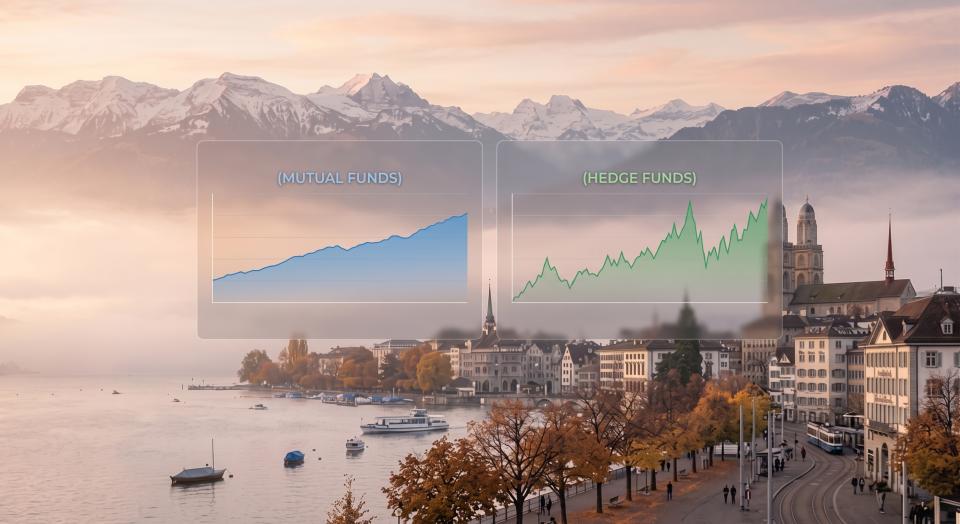
This environment has reinforced the relevance of active hedge fund strategies. Unlike passive exposure to indices, active managers can dynamically adjust gross exposure, hedge risks, reduce leverage, and reposition portfolios as conditions evolve. Recent hedge fund positioning demonstrated the value of flexibility, particularly among Global Macro and Long/Short Equity strategies. Managers who reduced risk early, diversified geographically, and focused on liquidity preservation were able to navigate the volatility with significantly more resilience than broader market benchmarks.
The role of commodities and energy markets also became increasingly important. Commodity-linked currencies, gold, oil, and defensive positioning emerged as critical stabilizers in multi-strategy portfolios. Hedge funds with convex exposure to energy markets were able to benefit not only from directional moves, but also from volatility asymmetry during periods of stress. This highlights an important reality: in unstable environments, portfolio construction matters as much as directional market views.
At the same time, the divergence between sectors and companies widened considerably. Semiconductor-related names, industrial transitions, and selective cyclicals continued to generate opportunities for equity long/short managers, while overvalued growth themes and crowded trades created attractive short opportunities. The increasing dispersion across individual securities reinforced the importance of active stock selection and disciplined risk management.
Another important development has been the breakdown of the traditional “everything rallies together” regime that dominated the post-pandemic period. Interest rates have normalized, liquidity conditions have tightened, and market participants have become significantly more reactive to macroeconomic developments. This transition favors strategies capable of adapting quickly rather than relying on static beta exposure.
For institutional allocators, the implications are increasingly clear. The market environment now rewards flexibility, selective exposure, liquidity management, and tactical allocation. In this context, risk assets require more sophisticated portfolio management frameworks than during the era of abundant liquidity and synchronized market growth.
Looking ahead, macro uncertainty is likely to remain elevated. Central banks continue to face difficult trade-offs between inflation control and economic growth, geopolitical fragmentation remains unresolved, and energy markets continue to influence broader financial conditions. For this reason, active hedge fund strategies may continue to play a growing role within diversified portfolios.
The current cycle increasingly favors managers who combine deep research, disciplined exposure management, and the ability to react quickly to evolving market conditions. In a world defined by volatility, dispersion, and shifting correlations, active management is no longer simply an alternative — it is becoming a structural necessity.