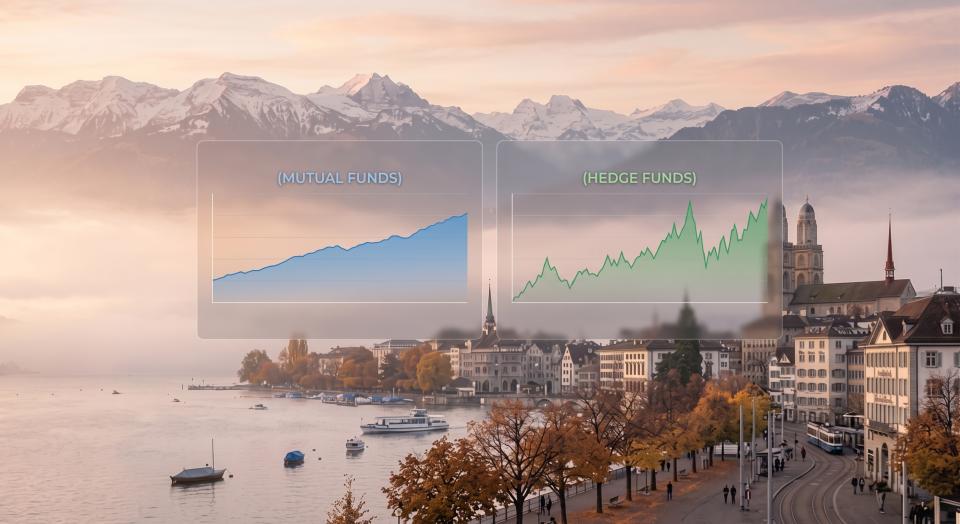
Equity Strategies in a Fragmented and Volatile Market Environment
Global equity markets in 2026 are operating in an environment defined by heightened volatility, geopolitical fragmentation, sector divergence, and increasingly unstable market leadership. After years in which passive investing and broad market beta dominated performance, investors are now facing a market cycle where active positioning, stock selection, and disciplined risk management have regained strategic importance. In this environment, institutional investors are increasingly reassessing the role of active equity strategies within diversified portfolios.
One of the defining characteristics of the current market environment is the growing dispersion between sectors, regions, and individual companies. While certain technology segments, industrial companies, and energy-linked businesses continue to demonstrate resilience, other areas of the market face substantial pressure from higher financing costs, weaker demand, and geopolitical uncertainty. This widening dispersion creates a significantly richer opportunity set for active managers capable of identifying both long and short opportunities across markets.
Recent market developments demonstrated how rapidly equity leadership can change. During the first quarter of 2026, investors experienced sharp rotations between growth and value, defensive and cyclical sectors, as well as between developed and emerging-market equities. Semiconductor-related companies, industrial transition themes, and selected Asian technology supply chains generated strong relative performance at various points throughout the quarter, while crowded positions and overvalued growth names experienced abrupt reversals.
This environment has reinforced the importance of flexible and research-driven equity strategies. Unlike passive exposure to broad market indices, active managers can dynamically adjust exposure, hedge risk, reduce concentration, and reposition portfolios as macroeconomic conditions evolve. In periods of elevated volatility and unstable correlations, these capabilities become increasingly valuable.
The sharp escalation of geopolitical tensions in March 2026 further highlighted the vulnerability of traditional equity allocations. The escalation of the Iran conflict triggered broad-based selling across global equity markets, while correlation spikes caused many traditionally diversified portfolios to move simultaneously lower. Asian equities experienced particularly severe pressure, with the MSCI Asia Index recording one of its sharpest monthly declines in recent years.
Long/Short Equity managers responded to this environment by rapidly reducing gross exposure, tightening risk controls, and emphasizing liquidity preservation. Sector-specific exposures in banks, mining, shipping, and cyclically sensitive industries faced significant drawdowns, while defensive positioning, hedges, and selective energy exposure provided important offsets. This active management approach helped contain losses during a period characterized by forced deleveraging and unstable market conditions.
Another major shift in global equities has been the increasing importance of factor dispersion. Markets are no longer moving uniformly. Instead, performance differences between companies have widened considerably due to varying exposure to inflation, interest rates, supply-chain disruptions, and geopolitical risks. This environment strongly favors managers capable of conducting differentiated fundamental research and disciplined stock selection.
Technology-related sectors continue to remain an important area of opportunity, although leadership within the sector itself has become increasingly selective. Hardware-linked AI beneficiaries, semiconductor manufacturers, and companies connected to industrial automation have shown resilience, while many software and high-multiple growth businesses faced valuation compression as interest rates normalized.
Importantly, today’s market environment increasingly rewards risk management alongside return generation. During prolonged periods of low volatility, many investors became accustomed to rising equity indices and relatively stable correlations. However, the current regime demonstrates that preserving capital during stress events can be equally important as capturing upside participation during rallies.
The relationship between macroeconomic developments and equity performance has also become significantly stronger. Inflation expectations, energy prices, currency movements, and central-bank policy shifts now influence sector rotation and equity valuation much more directly than during previous years. As a result, successful equity strategies increasingly require a combination of bottom-up stock analysis and top-down macro awareness.
Another important trend is the growing differentiation between passive and active investing outcomes. Broad market indices can become heavily concentrated in a small number of large-cap stocks, increasing vulnerability during periods of correlation stress or sector reversals. Active equity managers, by contrast, can diversify exposures more selectively and avoid crowded positioning where risk-adjusted returns appear unattractive.
Looking ahead, volatility and dispersion are likely to remain elevated across global equity markets. Geopolitical fragmentation, tighter financial conditions, shifting monetary-policy expectations, and evolving global supply chains continue to create uncertainty across regions and sectors. In this context, active managers capable of adapting dynamically to changing market conditions may continue to gain relevance within institutional portfolios.
As markets transition into a more complex and fragmented environment, active equity strategies are increasingly positioned to benefit from volatility, sector divergence, and differentiated alpha opportunities. For institutional investors seeking flexibility, resilience, and long-term capital preservation, active equity management is once again becoming a central component of portfolio construction.