How Hedge Funds Trade: Inside the Strategies of Alternative Investments
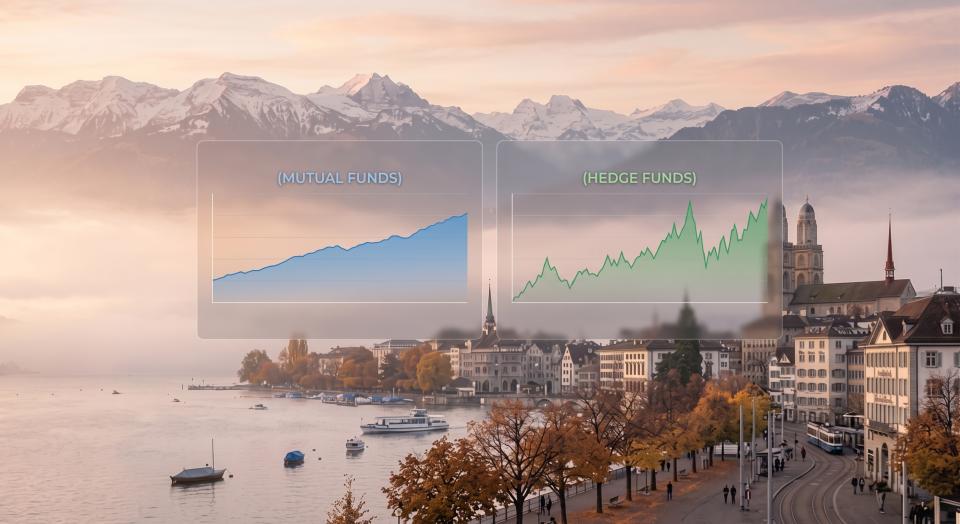
The question how hedge funds trade touches the core of what makes them different from traditional investment vehicles. Unlike mutual funds or ETFs, which often simply track an index or buy and hold diversified portfolios, hedge funds employ sophisticated, flexible, and sometimes unconventional strategies. Their mandate is not only to participate in market growth but to generate absolute returns regardless of broader economic conditions. To understand how hedge funds trade, one must look at their structural freedoms, their strategies, their risk management, and the psychology of the managers who drive them.
Hedge funds are defined not so much by the assets they hold but by how they trade them. While mutual funds may be restricted from short selling or using derivatives, hedge funds can take long and short positions, employ leverage, and move rapidly between asset classes. This flexibility is at the heart of the answer to how hedge funds trade. They are opportunistic, able to adjust quickly as market conditions change, which gives them an advantage in volatile or uncertain environments.
One common way hedge funds trade is through long/short equity strategies. This involves buying stocks expected to rise and shorting those expected to fall. The goal is to profit from relative performance rather than market direction. Another approach is global macro trading, where managers make large bets on interest rates, currencies, and commodities based on macroeconomic views. In both cases, leverage is often used to magnify returns, though it also increases the risk of losses.
Event-driven strategies provide another example of how hedge funds trade. Here, managers look for opportunities created by corporate events such as mergers, acquisitions, bankruptcies, or restructurings. By analyzing how these events are likely to affect security prices, hedge funds can position themselves for profits independent of general market trends. Distressed debt is a subset of this strategy, where funds buy securities of companies in financial trouble at deep discounts, betting on recovery or restructuring.
Quantitative trading is yet another dimension of how hedge funds trade. Using advanced algorithms, statistical models, and increasingly artificial intelligence, quant funds seek to exploit small inefficiencies in markets. They may execute thousands of trades per day across equities, bonds, futures, and currencies. Unlike discretionary strategies, which rely on human judgment, quant strategies are driven by data, computing power, and speed.
Hedge funds also engage in arbitrage strategies, exploiting price differences between related assets. Convertible arbitrage, for example, involves buying convertible bonds while shorting the underlying stock. Statistical arbitrage uses complex mathematical models to identify mispricings across thousands of securities. These approaches illustrate that how hedge funds trade is often about precision, discipline, and exploiting small edges at scale.
Risk management is central to every hedge fund’s trading approach. While their strategies can be aggressive, managers use tools such as stop-loss orders, portfolio diversification, and hedging techniques to control downside risk. Liquidity management is equally important. Hedge funds may limit investor withdrawals or impose notice periods precisely because their trading strategies sometimes involve illiquid assets that cannot be sold immediately without moving the market.
The answer to how hedge funds trade also depends on the culture and philosophy of the fund. Some managers are highly concentrated, placing enormous bets on a small number of ideas. Others are diversified across dozens of positions. Some trade daily, even hourly, while others hold positions for years. The unifying theme is flexibility and the pursuit of alpha—the ability to generate returns above what the market provides.
In conclusion, how hedge funds trade is not a single formula but a spectrum of approaches. From long/short equity to global macro, from event-driven plays to quantitative models, hedge funds trade with the goal of generating uncorrelated, absolute returns. Their freedom to use leverage, derivatives, and short selling distinguishes them from traditional funds. For investors, the key is to understand that hedge fund trading is as much about managing risk and liquidity as it is about seeking opportunity.