Equity Indices and the Limits of Passive Investing in Volatile Markets
For more than a decade, passive investing and broad market exposure dominated global portfolio allocation. Supported by low interest rates, expansive monetary policy, and abundant liquidity, major stock market benchmarks consistently delivered strong returns while volatility remained relatively contained. However, the investment environment of 2026 is increasingly challenging the assumptions behind passive investing and raising important questions about the long-term resilience of traditional equity indices.
The first quarter of 2026 highlighted how rapidly market conditions can change when geopolitical uncertainty, inflation pressure, and cross-asset volatility intensify simultaneously. Global equity markets experienced sharp drawdowns, unstable correlations, and repeated sector rotations, while many investors discovered that diversification through broad indices alone may not provide sufficient protection during periods of systemic stress.
One of the defining features of recent market conditions has been the increasing synchronization of large-cap stocks during periods of stress. During the escalation of geopolitical tensions in March 2026, major components of the S&P 500 began moving in tandem as investors rapidly reduced risk exposure across sectors. This correlation spike significantly reduced the diversification benefits normally associated with broad market benchmarks.
The current environment demonstrates that equity indices are not immune to structural concentration risks. Many major benchmarks are increasingly dominated by a relatively small number of large-cap technology and growth companies. During periods of strong liquidity and synchronized economic growth, this concentration can enhance performance. However, when market leadership changes or macroeconomic uncertainty rises, concentrated index exposure can amplify downside volatility.
Sector rotations throughout early 2026 further reinforced these dynamics. Semiconductor manufacturers, industrial transition themes, commodity-linked businesses, and selective defensive sectors periodically outperformed broader markets, while overvalued software and high-duration growth stocks experienced sharp reversals. These rapid shifts created substantial performance dispersion between sectors and individual companies.
This increasing dispersion has important implications for institutional portfolio construction. During previous years, passive exposure to broad equity indices often delivered satisfactory results because liquidity conditions supported most sectors simultaneously. Today, however, performance is becoming increasingly dependent on stock selection, sector allocation, and risk management rather than simply maintaining broad market exposure.
The role of macroeconomic factors has also become significantly more important. Inflation expectations, central-bank policies, geopolitical tensions, energy prices, and currency movements now influence equity performance much more directly than during the low-volatility environment of the post-pandemic years. As a result, broad market indices can experience sharp simultaneous repricing even when corporate fundamentals remain relatively stable.
The events of March 2026 illustrated this vulnerability clearly. The escalation of the Iran conflict and uncertainty surrounding energy markets triggered forced deleveraging across equities, fixed income, currencies, and commodities at the same time. Traditional diversification assumptions weakened as markets became dominated by macro headlines and liquidity stress rather than company-specific fundamentals.
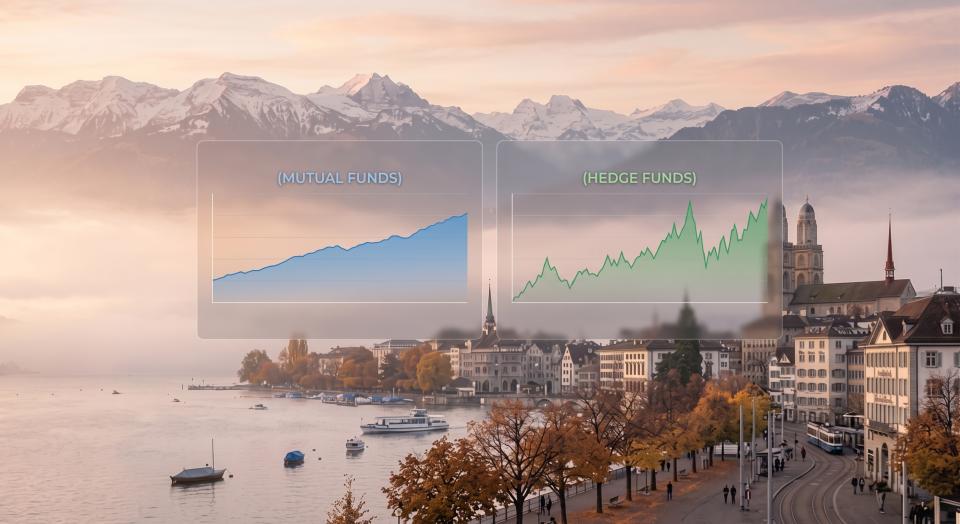
In this environment, active management has regained strategic importance. Long/Short Equity managers, Global Macro funds, and multi-strategy hedge funds were able to adjust exposure dynamically, reduce leverage, hedge sector risks, and increase liquidity preservation during periods of stress. Managers who reduced gross exposure early and emphasized disciplined risk control were significantly more resilient than passive market exposure alone.
Another important development is the increasing divergence between regional equity markets. Asian equities, European cyclicals, US technology stocks, and commodity-sensitive sectors are no longer moving uniformly. Instead, regional growth dynamics, monetary policy differences, and geopolitical exposure are creating increasingly fragmented market leadership. This fragmentation makes active allocation across regions and sectors more valuable than during previous cycles.
Importantly, volatility itself is becoming a structural feature of modern markets rather than a temporary disruption. Higher interest rates, tighter liquidity conditions, geopolitical fragmentation, and more reactive market participants all contribute to a regime where sharp rotations and correlation spikes may occur more frequently. In such conditions, passive investing can become increasingly exposed to unintended concentration and liquidity risks.
The growing complexity of modern markets does not necessarily mean that passive investing loses relevance entirely. Broad equity indices continue to provide efficient market exposure and remain important components of institutional portfolios. However, the current environment increasingly suggests that passive exposure alone may no longer be sufficient for investors seeking resilience during unstable market conditions.
As global markets transition into a more volatile and fragmented regime, institutional investors are increasingly reassessing the balance between passive beta exposure and active alpha generation. The current market cycle rewards flexibility, liquidity management, tactical positioning, and differentiated research capabilities.
In this evolving environment, the role of active strategies alongside traditional equity indices is likely to continue expanding. Investors capable of combining broad market exposure with active risk management and selective positioning may be better prepared to navigate the structural volatility shaping global financial markets in the years ahead.