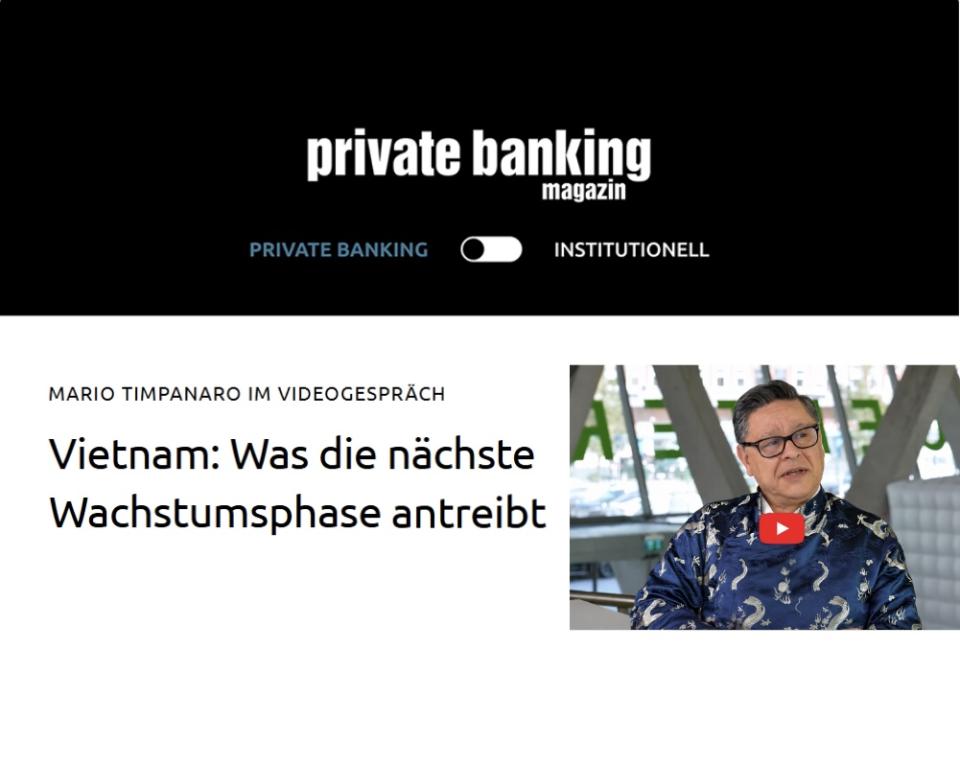
Vietnam: Growth Momentum with a Diversification Advantage
Vietnam’s Economy Continues to Deliver Strong Growth. International equity investors can benefit from this momentum while simultaneously diversifying their portfolios. Early investors also have the opportunity to capitalize on the country’s expected transition to Emerging Market status.
The term Doi Moi (“Renewal”) has shaped Vietnam’s economy for the past 40 years. In 1986, the Communist Party of Vietnam launched a reform process under this initiative, gradually transforming the country from a centrally planned economy into a market-oriented one and laying the foundation for remarkable economic growth. For 2026, the International Monetary Fund forecasts GDP growth of 7.1%.
Strong Growth Drivers
Vietnam’s economic momentum is supported by several pillars that are expected to provide stability and sustainable growth over the medium term, creating an attractive environment for equity investors.
First, a robust macroeconomic environment, characterized by relatively low public debt and healthy household balance sheets, provides an excellent foundation for rising consumer spending and growing credit demand. This is further supported by favourable demographics, with a young population and an average age of just 33 years.
A second key growth driver is the manufacturing sector. Vietnam continues to benefit from the ongoing restructuring of global supply chains as international companies diversify their production networks.
International companies increasingly regard Vietnam as an attractive manufacturing location for higher value-added products. Foreign direct investment has recently reached record levels, says Mario Timpanaro, Portfolio Manager of the Lumen Vietnam Fund at AQUIS Capital.
Two additional engines of growth are the government’s continued investment in infrastructure and the expansion of domestic consumption. Rising incomes, urbanisation and a growing middle class continue to strengthen domestic demand, complementing the country’s export-oriented economy.
Low Correlation, Attractive Valuations and Emerging Market Potential
Vietnam’s structural strengths provide a solid foundation for a growing equity market, supported by strong earnings momentum and rising share prices. Owing to its relatively low correlation with developed equity markets, as well as with many other emerging markets, Vietnamese equities represent an attractive addition to globally diversified investment portfolios.
Despite these favourable fundamentals, valuations in the Vietnamese equity market remain attractive. Risk premiums continue to reflect a degree of caution among international investors, while the country’s long-term growth potential is still not fully reflected in market valuations, explains Timpanaro.
Vietnam is still classified as a Frontier Market by major index providers. However, this is expected to change soon. In September, FTSE Russell is expected to begin incorporating Vietnam into its Emerging Markets Index. Although MSCI remains more cautious, an upgrade to Emerging Market status is also anticipated in the coming years. Such upgrades typically increase investor interest and can trigger additional capital inflows.
Market Volatility Creates Attractive Entry Opportunities
The risks associated with investing in Vietnam are often overestimated. In fact, the market has demonstrated considerable resilience to external shocks in the past. While the Vietnamese equity market cannot completely escape periods of heightened global market volatility, it has frequently recovered faster than many other emerging markets.
Short-term external shocks – including the current environment – may create volatility. However, they do not alter Vietnam’s long-term fundamentals. It is precisely during such market phases that we see the most attractive opportunities for active investors, says Timpanaro.
For him and the fund management team, Vietnam remains one of the most compelling long-term growth stories in Asia, offering strong momentum for investors.
Interview with Mario Timpanaro, AQUIS Capital
“Vietnam: From Frontier to Emerging Market – Return Opportunities Through Market Inefficiencies”
Mario Timpanaro, Portfolio Manager of the Lumen Vietnam Fund, discusses the impact of the Iran conflict on Vietnam’s economy, the distinctive characteristics of the Vietnamese equity market, and explains why it is particularly well suited to active investment management.
Mr. Timpanaro, what impact is the Iran conflict and its related developments having on Vietnam’s economy and equity market?
Mario Timpanaro: In the short term, Vietnam is not immune to global geopolitical tensions. Rising prices for commodities such as oil, gas and fertilizers are increasing inflationary pressure, weighing on consumer confidence and affecting the margins of energy-intensive industries. Potential disruptions to global supply chains may also temporarily impact the country’s manufacturing and export sectors. Structurally, however, Vietnam remains well positioned. Its energy supply is more diversified, and the government retains sufficient political and fiscal flexibility to respond with targeted measures.
From a market perspective, periods like these typically result in increased volatility. For long-term investors, however, such market conditions often present attractive entry opportunities, as Vietnam’s fundamental growth story remains firmly intact.
What distinguishes the Vietnamese equity market?
Timpanaro: The Vietnamese equity market comprises approximately 1,600 listed companies. However, market capitalization and liquidity are heavily concentrated in a relatively small number of large-cap stocks. The majority of listed companies receive only limited coverage from international brokers, largely due to language barriers and liquidity constraints.
The market is predominantly retail-driven, which regularly results in pricing inefficiencies in individual stocks. At the same time, high-quality but less visible companies—particularly in the small- and mid-cap segments—receive limited research coverage and are often undervalued. This combination of regulatory inefficiencies, local-language reporting, limited analyst coverage and high index concentration creates structural inefficiencies that active investors can exploit. Looking ahead, we expect further improvements in market transparency and infrastructure, supported by ongoing reforms and Vietnam’s anticipated inclusion in the FTSE and MSCI Emerging Markets indices.
What advantages does an actively managed fund have over an index fund in the Vietnamese market?
Timpanaro: As mentioned, the Vietnamese market is inefficient and exhibits significant differences in company quality. An index does not capture these distinctions, as it allocates capital solely based on market capitalization, regardless of corporate governance, capital allocation or concentration risks in sectors such as banking and real estate.
Our active investment approach enables us to invest selectively in high-quality companies, including leading mid-sized businesses. We can identify long-term structural winners, build a well-diversified portfolio across multiple promising sectors and actively manage portfolio risk. In a dynamic market such as Vietnam, active stock selection is a key driver of long-term investment success.
What are the most important factors in your stock selection process?
Timpanaro: Our primary focus is on the quality of growth. We seek companies with strong market positions, solid balance sheets and compelling long-term strategies. A good example is companies operating industrial and logistics parks, which directly benefit from increasing foreign direct investment. These businesses typically have long-term lease agreements, highly visible cash flows and are well positioned to benefit from structural growth over many years.
Looking ahead, what do you see as the key drivers for Vietnamese equities? What are the main risks?
Timpanaro: Over the coming months, we continue to see an environment offering both opportunities and risks. On the risk side, persistent geopolitical tensions, a potential slowdown in global demand and inflationary pressures remain key concerns. At the same time, Vietnam’s core growth drivers remain firmly in place: rising foreign direct investment, extensive infrastructure projects aimed at enhancing productivity, a growing middle class that continues to strengthen domestic consumption, and, last but not least, the country’s anticipated upgrade to Emerging Market status.
Lumen Vietnam Fund Profile
Focusing on Vietnam’s High-Growth Mid-Market Companies
At AQUIS Capital, a dedicated local team of analysts conducts in-depth research for the Lumen Vietnam Fund. Their extensive expertise and broad local network enable the team to identify promising growth opportunities at an early stage while responding proactively to changing market conditions.
Vietnam has much to offer not only tourists but also investors. The country’s equity market is becoming increasingly accessible to international investors, providing opportunities to participate in the economic development of a nation with more than 102 million inhabitants. Investors can gain exposure through the Lumen Vietnam Fund, which was launched in March 2012. Portfolio Manager Mario Timpanaro has been involved since inception and is a co-founder of the actively managed UCITS fund focused exclusively on Vietnamese equities.
The fund is domiciled in Liechtenstein and managed under the umbrella of the Swiss asset management boutique AQUIS Capital. It has grown to approximately EUR 380 million in assets under management, reflecting increasing investor demand for portfolio diversification through exposure to Vietnam’s equity market, as well as the fund’s successful investment strategy. Investors who joined the fund at launch have seen their investment increase more than fourfold, equivalent to an average annual return of over 10% in the fund’s base currency, the US dollar (Lumen Vietnam Fund USD-R, as of 31 March 2026). Currency-hedged share classes in both euro and Swiss franc are also available.
A Strong Local Presence
The foundation of the fund’s investment process is its local team.
“Having a strong local presence in Vietnam is essential,” says Timpanaro.
Although he is based in Switzerland, he visits his second home, Vietnam, several times each year.
“Through AQUIS Capital’s subsidiary, Vietnam Holding Asset Management, we have a highly qualified team in Ho Chi Minh City that independently analyses listed companies. Our analysts have extensive local networks and a deep understanding of both the economy and the political environment.”
This local expertise enables the team to identify attractive growth opportunities early and establish positions at compelling valuations. While the portfolio includes large-cap companies, its primary focus is on small- and mid-cap businesses. In this segment, proprietary research is indispensable and creates opportunities to participate in the long-term growth of high-potential companies.
The fund invests in companies with above-average growth potential, strong competitive positions and high-quality management teams. ESG considerations are fully integrated into the investment process, with particular emphasis on corporate governance. Timpanaro believes that in emerging markets such as Vietnam, companies demonstrating high standards of transparency, strong shareholder rights and sound business practices are generally more resilient and better positioned for long-term success.
Dynamic Portfolio Allocation in a Volatile Market Environment
Approximately 100 companies make it onto the investment shortlist, while the portfolio typically consists of 35 to 45 holdings. The investment process combines both top-down and bottom-up analysis, enabling the portfolio management team to respond actively to changing market conditions.
Against the backdrop of gradually rising interest rates since the end of 2025, the portfolio has recently increased its exposure to sectors expected to benefit from higher rates. Energy and consumer staples have been given greater weighting, while the fund’s cash allocation has also increased, supported in part by new investor inflows. At the end of March, cash represented approximately 12% of the portfolio, compared with 19% at the beginning of the month.
This positioning helped mitigate part of the market volatility experienced in March as a result of the Iran conflict. Although the fund also posted negative returns during the month, it outperformed the Vietnam All Share Index and, unlike the index, maintained a positive performance for the first quarter of the year. The management team is now gradually deploying its cash reserves into sectors and companies that have experienced significant valuation declines in the higher interest rate environment but continue to demonstrate resilience to short-term challenges.
AQUIS Capital
Active Asset Management
AQUIS Capital’s objective is to be a leading specialist in active asset management, with a focus on alternative investments and Emerging Asia.
Putting Clients First
We take the time to understand our clients’ needs and translate them into tailored investment solutions. Our passion for what we do is reflected in every client relationship.
Sustainability – A Core Commitment
Sustainability and the UN Principles for Responsible Investment (UNPRI), including the Sustainable Development Goals (SDGs), are fully integrated into our investment philosophy and decision-making process.
Independence
We are 100% independent, entrepreneurial in our thinking and focused on delivering long-term, tailor-made investment solutions for our clients. Every member of our team is highly motivated and committed to maintaining the right balance between opportunity and risk.