Hedge Funds Outlook: Why Active Strategies Are Regaining Momentum in 2026
Hedge Funds Outlook: Why Active Strategies Are Regaining Momentum in 2026
The investment environment entering 2026 is fundamentally different from the conditions that dominated global markets during the era of ultra-low interest rates and passive-driven equity expansion. Higher dispersion across sectors, geopolitical uncertainty, diverging monetary policies, and elevated market volatility are reshaping the opportunity set for institutional investors. Against this backdrop, the current Hedge Funds Outlook appears increasingly constructive for active managers capable of navigating complex and rapidly changing market conditions.
According to AQUIS Capital’s January 2026 market commentary, hedge funds are once again benefiting from a market structure that rewards flexibility, tactical positioning, and disciplined risk management. Investors are increasingly seeking strategies capable of generating alpha independently from traditional market direction, particularly as concentration risks within major indices continue to rise.
One of the key themes defining the current market cycle is the widening gap between winners and losers across regions, sectors, and individual securities. Equity markets are no longer moving in a synchronized manner. Instead, the environment has become more fragmented, creating fertile conditions for stock selection and relative-value opportunities. This shift strongly supports the role of active hedge fund managers who can dynamically adjust exposures and identify mispriced assets.
The current Hedge Funds Outlook is also shaped by persistent macroeconomic uncertainty. Diverging central bank policies, uneven disinflation trends, and geopolitical tensions continue to create volatility across rates, currencies, commodities, and equities. Rather than viewing this uncertainty as a threat, many hedge fund strategies treat it as a source of opportunity. Global macro managers, for example, are increasingly benefiting from directional trends in foreign exchange markets, commodity price movements, and shifting interest-rate expectations.
Another important driver behind the improving outlook for hedge funds is the normalization of interest rates. For years, ultra-accommodative monetary policy reduced the effectiveness of many active strategies and compressed volatility across asset classes. In contrast, today’s environment presents more frequent market dislocations, sharper factor rotations, and higher sensitivity to new information. These dynamics reward managers with strong research capabilities, disciplined portfolio construction, and advanced risk management frameworks.
Within equity long/short strategies, managers have demonstrated the ability to capitalize on regional divergences and sector rotations. According to AQUIS Capital, Asian semiconductor and memory-related companies were among the strongest contributors during January 2026, while crowded software positions in the United States and Europe experienced significant de-grossing activity. This environment favored selective positioning and disciplined exposure management rather than broad directional bets.
Risk management remains central to the current Hedge Funds Outlook. Elevated single-stock volatility, changing liquidity conditions, and rapid sentiment shifts require managers to maintain flexibility while preserving downside protection. Hedge funds that combine diversified exposures with active monitoring of factor risks are increasingly positioned to outperform in uncertain markets.
At the same time, investors continue to place greater emphasis on diversification and liquidity. As private markets experience slower cycles and reduced liquidity conditions, many institutional allocators are reassessing the role of liquid alternative strategies within their portfolios. Hedge funds provide exposure to differentiated return streams that are less dependent on traditional equity beta, making them increasingly attractive in a structurally more volatile environment.
Event-driven strategies are also benefiting from improving conditions. Rising merger-and-acquisition activity, stronger corporate balance sheets, and renewed restructuring activity are expanding opportunities for catalyst-driven investments. Managers capable of analyzing complex transactions and regulatory developments may continue to benefit from increased corporate activity throughout 2026.
The broader market backdrop further reinforces the positive Hedge Funds Outlook. Market volatility remains above pre-pandemic norms, while sector leadership continues to rotate rapidly between technology, industrials, commodities, and defensive sectors. This creates a more dynamic environment in which active management can potentially deliver stronger relative performance compared with passive investment approaches.
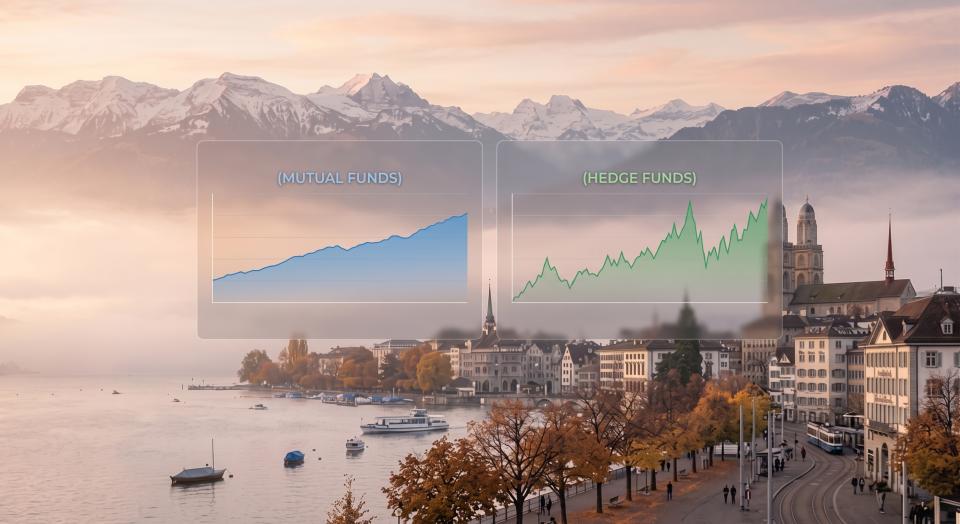
Looking ahead, hedge funds appear well positioned to benefit from several structural themes simultaneously: macro uncertainty, elevated dispersion, geopolitical fragmentation, and the growing investor demand for diversification. Importantly, the market environment now increasingly aligns with the core strengths of hedge fund investing — flexibility, active risk management, and the ability to generate alpha across multiple market conditions.
For investors seeking resilient portfolio construction in 2026, hedge funds may once again represent an essential component of modern asset allocation strategies.